History of Mashrabiya
- Home
- Mashrabiya
- History
History of Mashrabiya
A mashrabiya (مشربية) is a carved wooden lattice screen, usually fitted to a projecting upper-floor window, that has been part of Arab and Islamic architecture since at least the 12th century. It shades the room, lets air flow through, and lets people inside look out without being seen from the street.
Where does the word mashrabiya come from?
There are two explanations. The most common links the word to the Arabic root sharaba, “to drink”: clay water jars were placed on small wooden shelves inside the screen so the passing breeze would cool the water. A less common view says the original word was mashrafiya, from a verb meaning “to overlook”, because the screen let people watch the street from above.
A short history
Mashrabiya screens are documented in Baghdad in the Abbasid period, around the 12th century, and they became especially widespread in the Ottoman era (1517 to 1805), when they lined the streets of cities such as Cairo. The screens spread across the Mashriq, and each region gave them its own name:
- Shanasheel (شناشيل) in Iraq, especially Basra and Baghdad
- Roshan (روشن, plural rawashin) in the Hijaz, famously in old Jeddah
- Mashrabiya in Egypt and the Levant
Traditional craftsmen built them from small pieces of turned wood joined into repeating hexagonal, cross and star patterns, sometimes with coloured glass. The work was slow and skilled, and from the late 19th century, modern building methods and labour costs led to a decline.
- Arabic: مشربية
- Documented since the 12th century
- Peak: Ottoman era, 1517 to 1805
- Iraq: shanasheel
- Hijaz: roshan
- Today: CNC-cut panels
Why the mashrabiya is back in modern design
In the 20th century, architects rediscovered the mashrabiya as a smart way to control sun and heat, which matters in a Gulf climate. Two well-known examples:
- Institut du Monde Arabe, Paris (1987): its south façade uses mechanical, light-sensitive openings inspired by the mashrabiya.
- Al Bahr Towers, Abu Dhabi (2012): designed by Aedas with Arup, the towers carry more than 2,000 triangular shading units that open and close with the sun, a moving version of the traditional screen.
Today, CNC cutting has made mashrabiya screens practical again for homes and businesses. A computer-guided router or laser cuts the full pattern from a single panel of wood, MDF, acrylic, ACP or metal, so detailed designs can be produced accurately, in any size, at a fraction of the time hand joinery takes.
How mashrabiya is used in UAE homes today
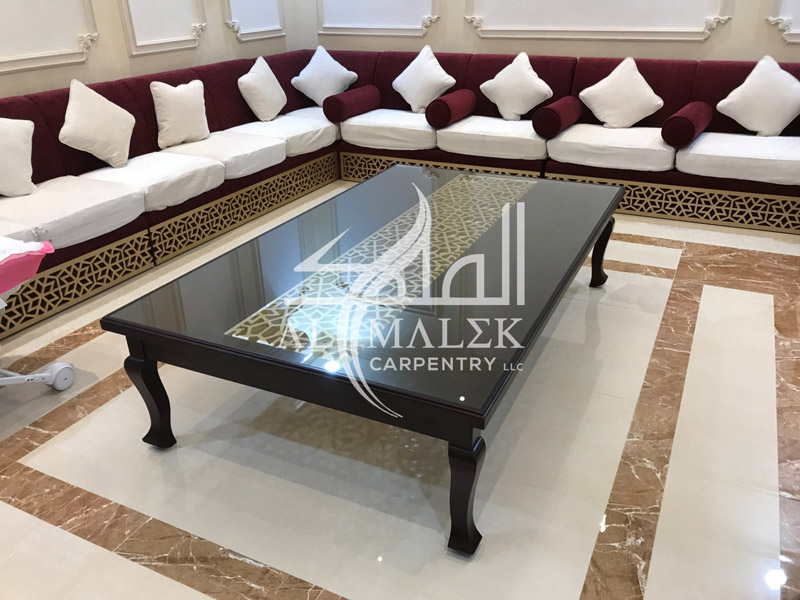
- Majlis partitions and backdrops
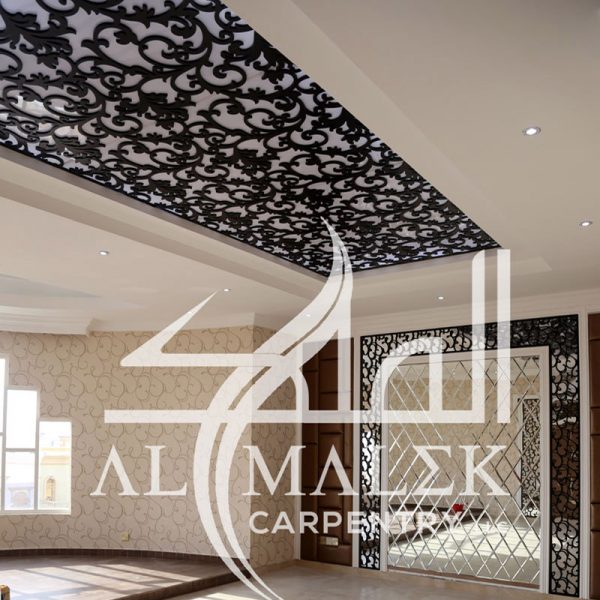
- Backlit ceiling panels
- Window, balcony and staircase screens
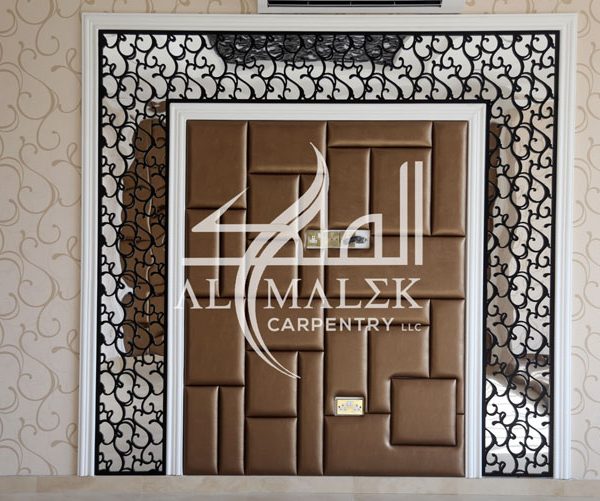
- TV and feature walls
- Garden and façade screens in ACP or metal
At Al Malek Carpentry in Ras Al Khaimah, we CNC-cut mashrabiya panels from our own pattern catalogue or your design and deliver them anywhere in the UAE. See our mashrabiya panels and CNC cutting services.
Frequently asked questions
What is the purpose of a mashrabiya?
A mashrabiya has three main purposes: it shades the interior from strong sun, it lets air move through the room to keep it cooler, and it gives privacy, because people inside can see out while people outside cannot see in. In traditional houses, water jars placed in the screen were also cooled by the breeze.
What is the difference between a mashrabiya and a roshan?
They are regional versions of the same idea. Mashrabiya is the term used mainly in Egypt and the Levant, while roshan (plural rawashin) is the name used in the Hijaz, especially in historic Jeddah, where the screens are often larger and run over several floors. In Iraq, similar screens are called shanasheel.
Is a jali the same as a mashrabiya?
They are related but come from different traditions. A jali is a pierced stone or wooden lattice from Indian and Mughal architecture, while the mashrabiya comes from Arab architecture and was traditionally made of turned wood. Today both names are often used for CNC-cut decorative lattice panels.